
- Home
- Assessing the effects of tofacitinib on the gut microbiome in inflammatory bowel disease
- Assessing the effects of tofacitinib on the gut microbiome in inflammatory bowel disease
Inflammatory bowel disease (IBD) is driven not only by immune dysfunction, but also by imbalances in the gut microbiota and a weakened intestinal barrier. Tofacitinib citrate, an approved treatment for IBD, works by targeting the JAK–STAT signalling pathway to dampen inflammation. But while its immune effects are well understood, its interaction with the gut microbiome remains less clear.
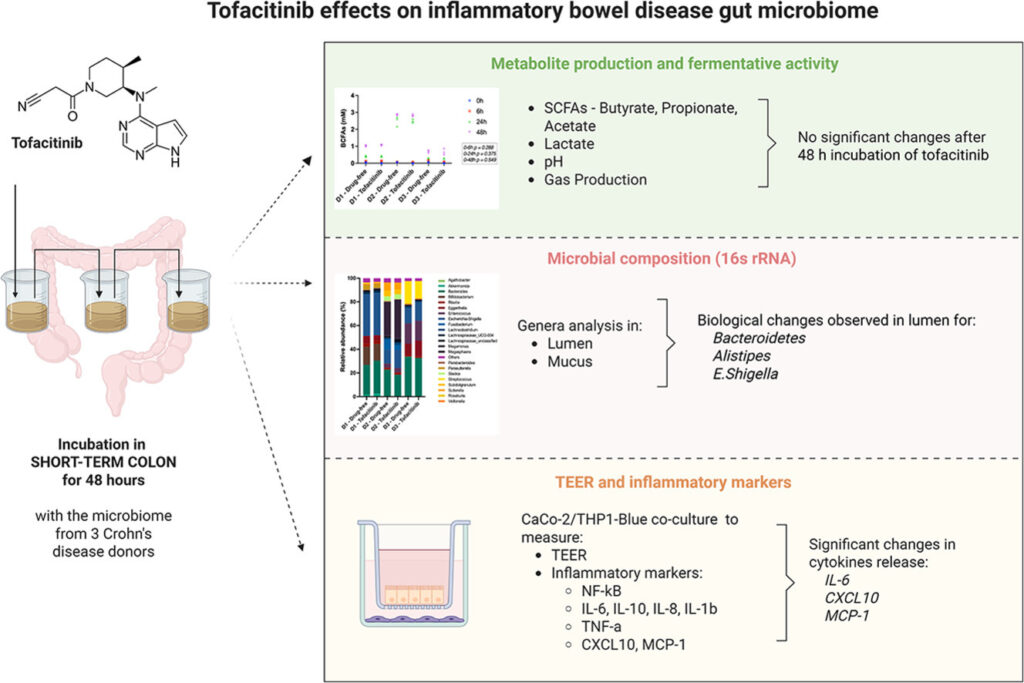
In this study, we explored how tofacitinib behaves in a complex gut environment using a laboratory model that mimics the human colon. The system contained microbiota from individuals with Crohn’s disease, allowing us to assess changes in microbial composition and metabolic activity following treatment. Alongside this, a co-culture model of intestinal and immune cells was used to evaluate effects on inflammation and barrier function.
Notably, tofacitinib did not significantly disrupt the microbiota’s overall composition or metabolic activity. In a condition already associated with microbial imbalance, this stability is an important finding.
At the same time, clear anti-inflammatory effects were observed. The drug reduced the production of key pro-inflammatory signalling molecules in certain donor samples, suggesting targeted immunomodulatory activity. These findings indicate that while tofacitinib may not directly reshape the microbiome, it can influence inflammatory responses within the gut environment.
Overall, this work highlights the importance of advanced colon models for understanding how medicines interact with the microbiome. By studying both microbial and cellular responses together, we can gain a clearer picture of how therapies work in the complex ecosystem of the gut, guiding more informed and effective treatment strategies for IBD.
Find the full article here.