
- Home
- Inkjet printing of pharmaceutical tattoos for the direct deposition of oestradiol onto skin in turner syndrome
- Inkjet printing of pharmaceutical tattoos for the direct deposition of oestradiol onto skin in turner syndrome
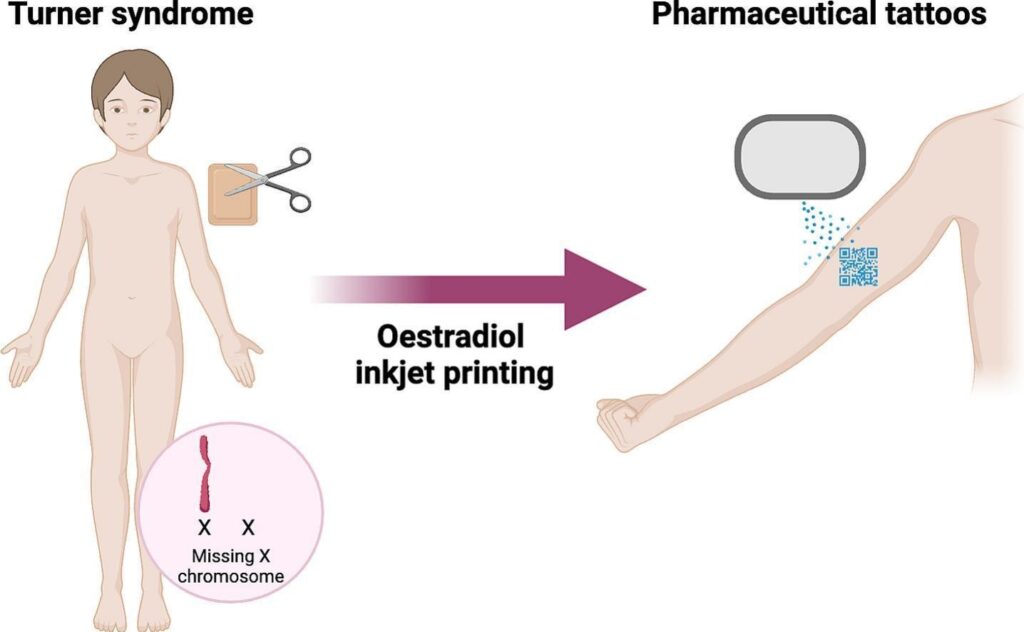
Turner syndrome is a rare chromosomal condition affecting females, caused by the partial or complete absence of one X chromosome. A central part of treatment is oestradiol hormone replacement therapy, which helps initiate puberty and support the development of secondary sex characteristics. Transdermal patches are often preferred because they provide steady hormone delivery and avoid first-pass metabolism. However, dosing in children remains challenging. Patches come in fixed strengths and cannot be safely divided, making gradual, personalised dose adjustments difficult during puberty.
This study explored an innovative alternative: using a handheld commercial inkjet printer to apply oestradiol directly onto the skin as temporary, drug-loaded tattoos. A specially formulated pharmaceutical “ink” containing oestradiol was developed and successfully printed onto paper and skin models with good consistency and clarity. The work demonstrates how readily available digital printing technology can be adapted for medical use.
A key advantage of this approach is flexibility. Instead of relying on fixed-dose patches, the delivered amount can be tailored by adjusting the ink concentration or the number of printing passes. This allows treatment to be personalised and modified over time as the patient’s needs change.
Laboratory permeation studies showed controlled hormone release over several hours, supporting overnight application to better reflect natural hormone patterns during puberty.
By enabling precise, low-dose delivery directly onto the skin, handheld inkjet printing represents a promising step toward more personalised hormone therapy for young patients with Turner syndrome, and highlights the potential of digital technologies to improve paediatric care.
Read more here.